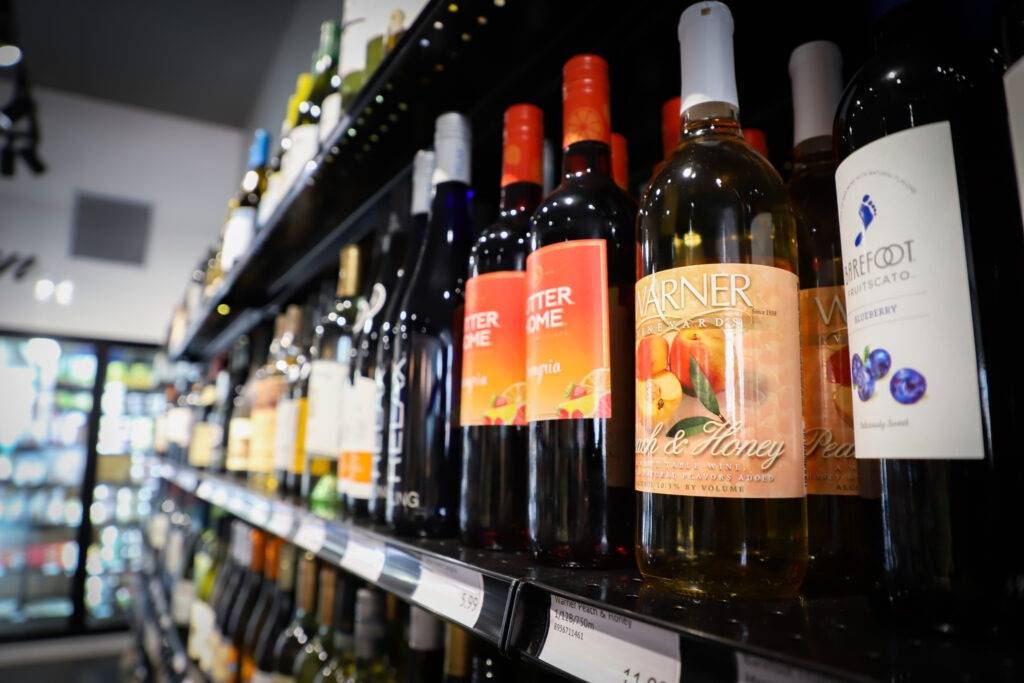
Red wine is a type of wine made from dark-colored grape varieties. The color of the wine can range from intense violet, typical of young wines, to brick red in mature wines, and brown in older red wines. The juice from most purple grapes is greenish-white, while the red color comes from anthocyanin pigments present in the grape skin. Red wine producers extract color and flavor components from grape skins, whereas white wine producers make wine without skin contact.
The winemaking process
The first step in red wine production, after picking, involves the physical processing of the grapes. Winemakers usually tip hand-picked or machine-harvested grapes into a receival bin when they arrive at the winery. They then convey the grapes by a screw mechanism to the grape-processing equipment.
On arrival at the winery, there is usually a mixture of everything. From individual berries to whole bunches (particularly with hand-picked grapes), as well as stems, and leaves. Winemakers remove the leaves and stems at this point, as their presence during fermentation can lead to a bitter taste in the wine.
After destemming, winemakers commonly lightly crush the grapes. Crushers usually consist of a pair of rollers, and winemakers can usually regulate the gap between them to allow for light, hard, or no crushing according to the winemaker’s preference.
Winemakers now call this mixture of grapes, skins, juice, and seeds must. Winemakers then pump the must to a vessel, often a tank made of stainless steel or concrete, or an oak vat, for fermentation.
Winemakers commonly add the preservative sulfur dioxide when grapes arrive at the winery. The purpose is to prevent oxidation and sometimes to delay the onset of fermentation. Winemakers may also add macerating enzymes at this stage to aid the extraction of color and fruit flavors from the skins and to facilitate pressing. They can also add tannins to help stabilize color, prevent oxidation, and combat the effects of rot.
Fermentation
Once the must is in a fermentation vessel, any yeast naturally present on the skins of the grapes or in the environment starts the alcoholic fermentation, in which it converts the sugars present in the must into alcohol, with carbon dioxide and heat as by-products. Many winemakers, however, prefer to control the fermentation process more closely by adding specially selected yeasts. Several hundred different strains of wine yeast are available commercially, and many winemakers believe that particular strains are more or less suitable for the vinification of different grape varieties and different styles of wine.
Soon after the must is placed in the fermentation vessel, the separation of solid and liquid phases occurs. Skins float to the surface, forming a cap. In order to encourage efficient extraction of color and flavor components, it is important to maximize contact between the cap of the skins and the liquid phase. This can be achieved by:
- Pumping over (pumping liquid from the bottom of the tank and spraying it over the floating cap; normally this would be done several times per day during fermentation)
- Punching down the cap (either manually or using an automated mechanical system)
- Submerging the cap (the cap is kept beneath the surface of the liquid phase by a physical restraint)
- Drain and return (the liquid phase is drained off the skins into another vessel and then pumped back over the skins)
The fermentation produces heat, and if left uncontrolled the temperature of the fermenting may exceed 40°C (104°F), which can impair flavor and even kill the yeast. The temperature is therefore often controlled using different refrigeration systems. Winemakers have different opinions about the ideal temperature for fermentation, but in general cooler temperatures (25-28°C; 77–82.4°F) produce fruitier red wines for early drinking while higher temperatures (28-35°C; 82.4-95°F) produce more tannic wines designed for long aging
A second microbiological transformation commonly takes place after the alcoholic fermentation of red wines. Winemakers usually refer to this process as malolactic fermentation (MLF), where bacteria convert malic acid naturally present in grape juice into lactic acid. They practice MLF almost universally for red wines. It often occurs naturally due to the presence of lactic acid bacteria in wineries. However, winemakers also use commercially available bacterial preparations to inoculate for MLF if necessary.
Once the MLF is complete, winemakers usually rack (decant) the red wine off its lees, which are dead yeast cells and other solids. They then add sulfur dioxide as a preservative to avoid oxidation and bacterial spoilage.
Winemakers age most red wine for some period before bottling. This period can vary from a few days for Beaujolais Nouveau. It can extend to 18 months or more for top Bordeaux reds. Aging can take place in stainless-steel or concrete tanks, or in small or large oak barrels. The latter impart some flavor to the wine based on their age and size. Small, new barrels give more flavor than large, older barrels.
Winemakers filter most wines at some stage before bottling. However, some winemakers use the absence of filtration as a marketing tool. Filtration makes wine completely clear. It also removes any remaining yeast cells and bacteria, which could make the bottled wine microbiologically unstable.